
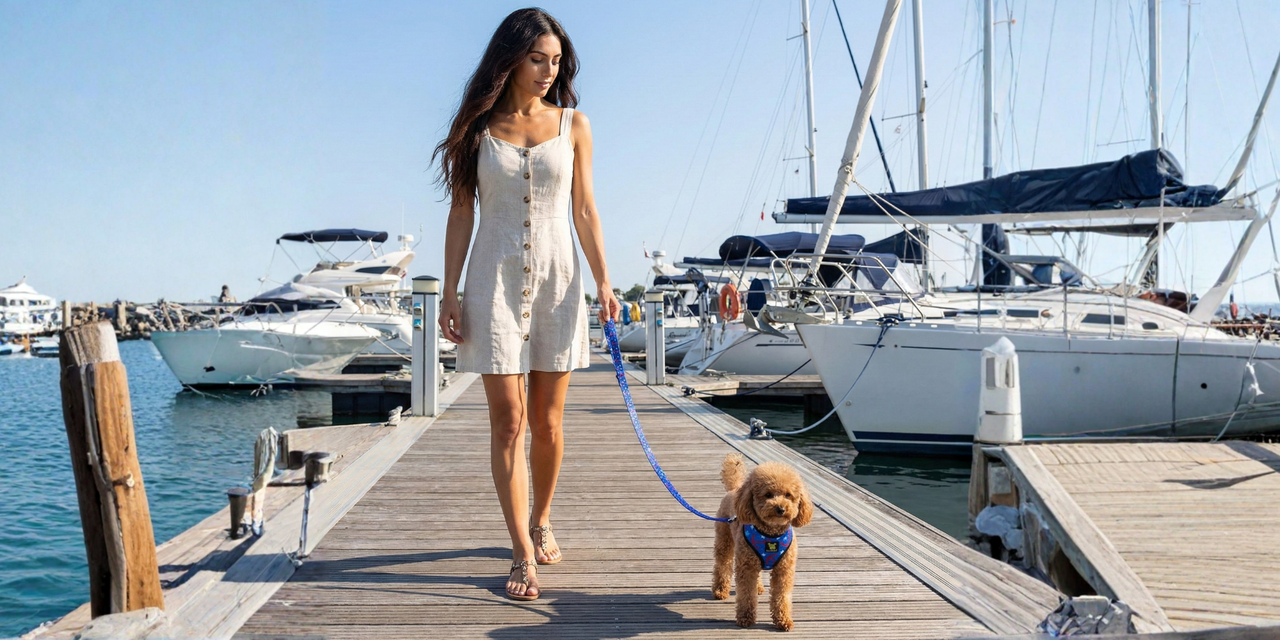
How to Choose Walk Gear for Teacup & Toy Breeds
If you are a pet parent to a Yorkie, a Frenchie, a Chihuahua, or any breed under 30 pounds, you already know the struggle: the pet store aisles are dominated by gear made for Golden Retrievers.

Shopping for a small dog is a completely different ballgame. Standard harnesses are often too bulky, heavy leash clasps drag your tiny pup down, and finding a fit that your "Houdini" dog can’t back out of feels impossible.
At EcoBark, we have specialized in sizing for the little guys (fitting dogs from a tiny 2 lbs up to 26 lbs) for the past 11 years. Choosing the right walking gear for a small dog comes down to protecting their fragile bodies and trachea, ensuring their comfort, and reducing your carbon pawprint with eco-friendly materials.
Here is everything you need to know about outfitting your small and tiny dog for their daily walks.

Harness vs. Collar: Why a Harness is Non-Negotiable for Small Dogs
While collars are great for holding ID tags and making quick trips to the backyard, they are never ideal for walking small dogs.
Small and toy breeds—especially Chihuahuas, Pomeranians, Yorkies, and Pugs—are genetically prone to a dangerous condition called tracheal collapse. Because their windpipes are incredibly fragile, the concentrated pressure from pulling on a standard neck collar can cause severe coughing, choking, and long-term airway damage.
A high-quality harness is the safest choice for a small dog because it:
-
Protects the Throat: It shifts the force of a pull completely away from the delicate trachea and distributes it evenly across the stronger chest and shoulders.
-
Prevents Escapes: Small dogs are notorious for slipping out of collars. A well-fitted harness wraps securely around the torso, making it much harder for a slippery pup to back out.
-
Offers Gentle Control: Harnesses give you a better center of gravity to gently guide your tiny dog away from danger without yanking their neck.

Types of Dog Harnesses: Finding Your Small Pup's Perfect Match
Tiny dogs have big personalities, and they all have different preferences for getting dressed. Here is a breakdown of the best harness styles for small frames:
1. The Step-In Harness (For the Head-Shy Pup)
Many small dogs completely panic when you try to pull a harness over their sensitive ears. If your pup hates things going over their head, a Step-In Harness is the ultimate stress-free solution.
-
Best for: Head-shy dogs, tiny puppies learning to walk on a leash, and senior dogs with limited mobility.
-
The EcoBark Difference: Our [Step-In Rapid Fastener Harnesses] feature double-padded, breathable mesh. You simply unbuckle it, lay it flat, have your dog step their front paws into the loops, and clip it securely across their back. No fuss, no pulled ears!
2. The Over-the-Head Harness (For the Cold or Pulling Pup)
Small dogs get colder much faster than large breeds. An over-the-head style provides more chest and belly coverage, acting like a soft, warm cushion. It also provides fantastic weight distribution if your little dog thinks they are a sled dog and loves to pull.
-
Best for: Everyday walking, dogs that escape easily, and breeds that shiver in the cold.
-
The EcoBark Difference: Our [Max Comfort Harnesses] feature extra plush piping around the neck opening to guarantee a soft, no-choke experience. Plus, the adjustable straps are made from eco-friendly, recycled plastic water bottles!

Choosing the Right Leash for a Small Dog
When you have a 10-pound dog, the leash hardware matters just as much as the leash itself. Heavy metal clips meant for large breeds will literally weigh down your small dog's back, making walks miserable.
Furthermore, skip the retractable leashes. They are dangerously unpredictable, and the sudden jerk when a small dog hits the end of a retractable line can cause severe whiplash.
Instead, opt for a high-quality Flat Leash designed with small dogs in mind:
-
Lightweight Hardware: Look for a leash that uses durable but lightweight clasps that won't weigh down the harness D-ring.
-
Length: A 4-foot to 6-foot leash gives your dog room to sniff while keeping them close enough to scoop up if an off-leash dog approaches.
-
The EcoBark Difference: Our [Comfort Grip Leashes] are lightweight but incredibly strong. They feature handles lined with ultra-soft memory foam, saving your hands, and come in vibrant, eco-friendly patterns that perfectly match your pup's harness.
The Overlooked Detail: Why Leash Width Matters
When shopping for a leash, most pet parents focus on length and color, but completely overlook one of the most critical factors for small dogs: the width. A standard 1-inch wide dog leash might look sturdy and safe, but for a dog under 15 pounds, it is a massive burden. Wide leashes require large, heavy metal clasps. When you clip a heavy, bulky clasp onto the back of a 4-pound teacup pup, it physically weighs them down. It causes their perfectly fitted harness to sag to one side and forces them to drag unnecessary weight, which can alter their natural gait and exhaust their tiny legs.
For XXS and small dogs, a thinner leash is an absolute must.
What to look for:
-
Slim Profiles: Look for leash widths between 3/8-inch and 5/8-inch. These thinner straps reduce the overall fabric weight drastically.
-
Micro-Hardware: Slimmer leashes use appropriately sized micro-clasps. These clips are engineered to be incredibly secure and durable, but light enough that your dog won't even notice they are attached.
By pairing a lightweight, slim-profile flat leash with your step-in harness, you ensure your dog feels completely free and unhindered while you maintain total control.
-
How to Get the Perfect Fit for a Tiny Frame
Because EcoBark specializes in XXS and teacup sizes, our sizing is uniquely tailored to tiny frames. To avoid the hassle of returns, always measure your dog before ordering!
How to measure:
-
The Lower Neck: Measure the base of the neck, where a harness naturally sits (lower than where a standard collar sits).
-
The Chest Girth: Wrap your measuring tape around the widest part of your dog's chest, right behind their front legs.
-
The Finger Rule: Once the harness is on, you should be able to slide one or two fingers comfortably between the harness and your dog's body. (For a 3-pound teacup pup, a snug one-finger fit is usually perfect!).

Frequently Asked Questions About Walking Small Dogs
Why is walking a small dog on a collar dangerous? Small breeds, such as Yorkies, Pomeranians, and Chihuahuas, have incredibly delicate windpipes and are genetically prone to a condition called tracheal collapse. When a small dog pulls against a standard neck collar, all that pressure goes directly into their throat. A harness is significantly safer because it takes the pressure completely off the neck and distributes it across the much stronger chest and shoulders.
My small dog is an escape artist. Which harness will stop them from backing out? For "Houdini" pups, the fit is everything. We highly recommend a Custom-Fit Harness that features adjustment points at both the neck and the chest. By tailoring both straps to your dog's exact micro-proportions, you eliminate the gaps that allow them to wiggle backward and slip out.
How do I know what size harness to buy for a teacup pup? Never guess based on weight alone! Because small dogs carry their weight differently, you must measure them. Use a soft measuring tape to measure the chest girth (the widest part of the chest behind the front legs). For teacup pups under 5 lbs, aim for a snug fit where you can comfortably slide just one finger between the harness and their body.
Are retractable leashes safe for small dogs? No, retractable leashes are not recommended, especially for small dogs. They offer very little control in emergency situations (like an off-leash dog approaching). Furthermore, the sudden jerk when a fast-moving small dog hits the end of a retractable line can cause severe whiplash or spinal injury. A lightweight, 4-foot to 6-foot flat leash is much safer.
What makes EcoBark gear eco-friendly? At EcoBark, we believe in protecting your pet and the planet. The adjustable straps on our harnesses are crafted from ROSH-tested, non-toxic polyester made from recycled plastic water bottles. By choosing our sustainable gear, you are actively helping to keep plastic waste out of our oceans and landfills!
